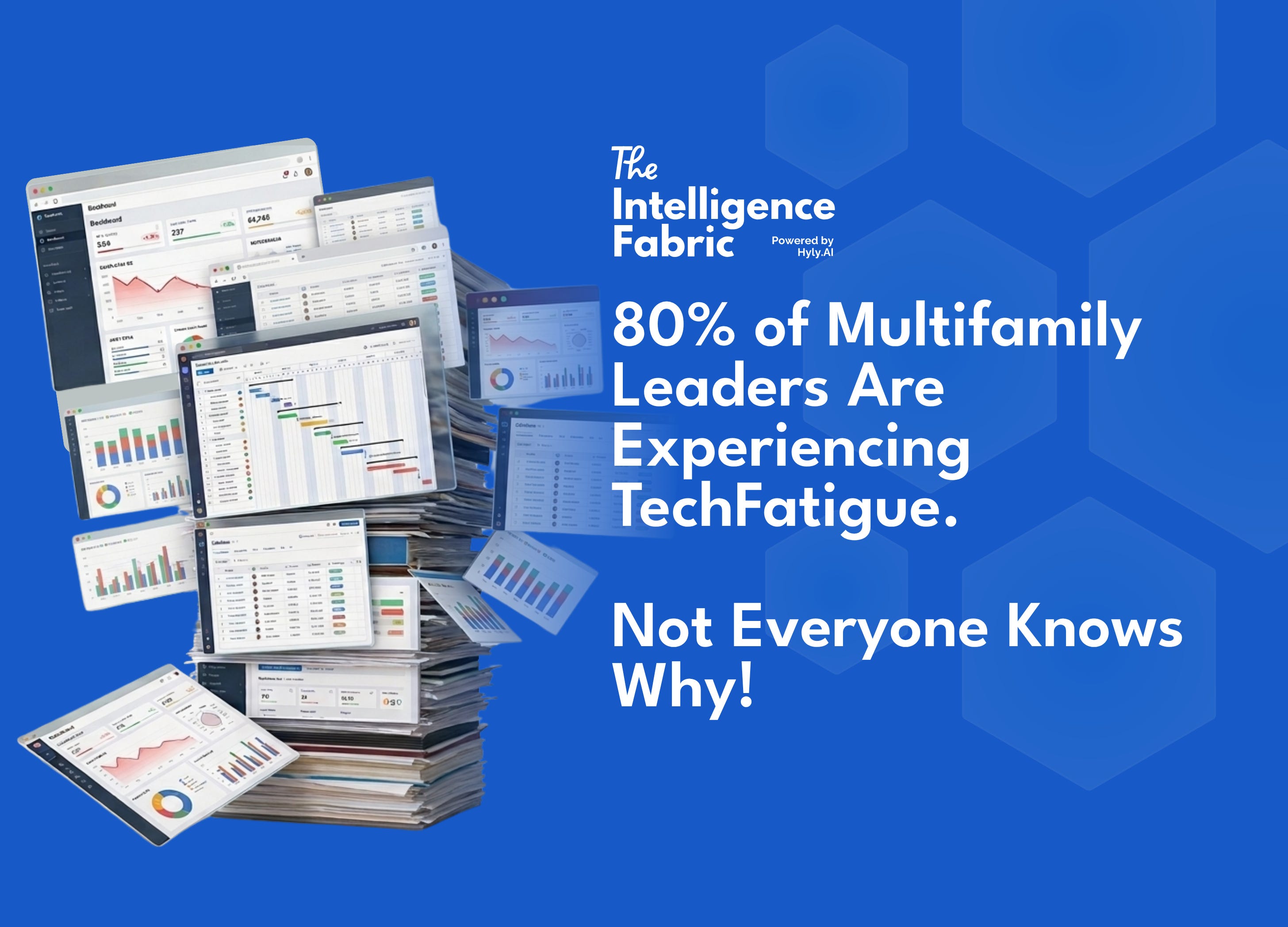
80% of Multifamily Leaders Are Experiencing TechFatigue. Not Everyone Knows Why!
Exhaustion is different from frustration. Frustration has a target. Exhaustion just accumulates.

Dom Beveridge runs the 20for20 Annual Survey — twenty in-depth conversations with senior multifamily executives, published every year, one of the most honest reads on where the industry actually is.
This year, he asked operators to describe 2025 in a word. Across twenty independent conversations, the same word kept coming back:
Exhaustion!
Exhaustion is different from frustration. Frustration has a target. Exhaustion just accumulates.
But where is it accumulating?
In Monday meetings that start with thirty minutes of arguing about which number is right.
In reports that have to be rebuilt from scratch every time.
In AI projects that looked promising and then quietly stopped working.
In the feeling that the stack keeps growing, and the work stays exactly the same.
The survey put specifics around it.
80% of the executives Dom interviewed said their tech stack is bloated.
One leader described four or more apps involved in a single resident interaction.
Another called integration the hidden tax.
A third said vendors were becoming liabilities because nothing plays nicely with everything else.
We’ve been sitting with those numbers. Because we hear versions of the same conversation every week on calls, at conferences, in threads where people are being more honest than usual.
The exhaustion isn’t the market. Three years of compressed NOI and high rates are real. But the exhaustion was there before the rates went up. It’ll be there after they come down. It’s structural.
The data is there. The systems are there. The stitching work is also there — every week, in the hours nobody budgets for and everyone absorbs.
That’s the cost that never shows up in a contract.
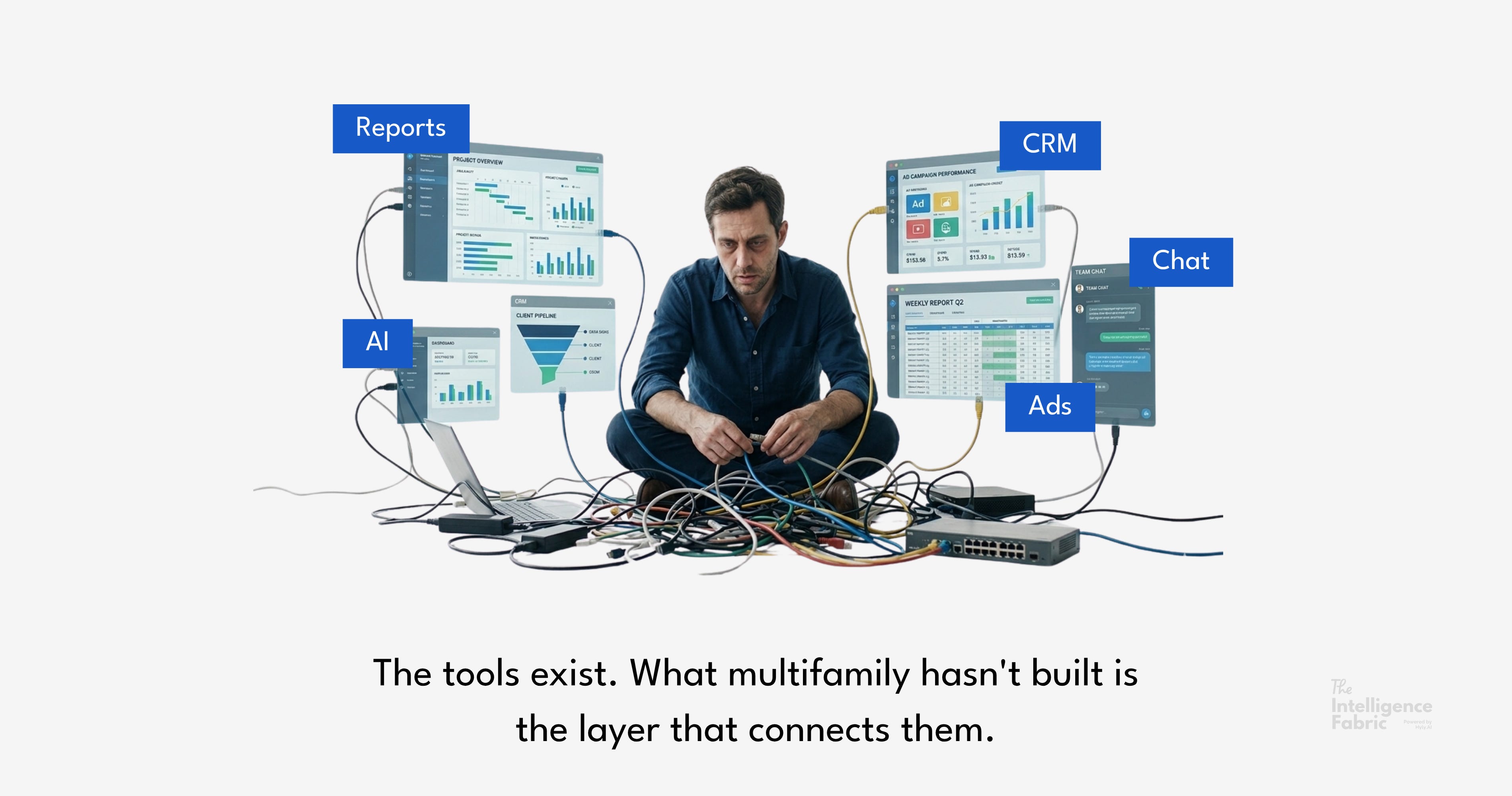
For most teams, AI made this harder before it helped. Applied to a fragmented stack, it speeds up outputs and leaves the stitching exactly where it was. The 20for20 survey found the same pattern — stalled pilots, integration costs higher than expected, vendors that couldn’t keep up. Operators added AI on top of systems that were never designed to reason together. The results didn’t hold.
The tools exist. What most companies haven’t built is the layer that connects them — the piece that carries context and sequence across the full operation so intelligence flows instead of fragments.
But 2026 Looks Different for a Few.
A handful of NMHC top operators are already running on such Fabric.
And the results are showing up, in:
Monday meetings that end in twelve minutes with a clear action.
AI that holds because it’s reasoning on connected intelligence, not fragmented outputs.
Budget decisions that stay made.
The manual stitching that was eating hours every week becomes infrastructure instead of overhead.
This layer is called the Intelligence Fabric.
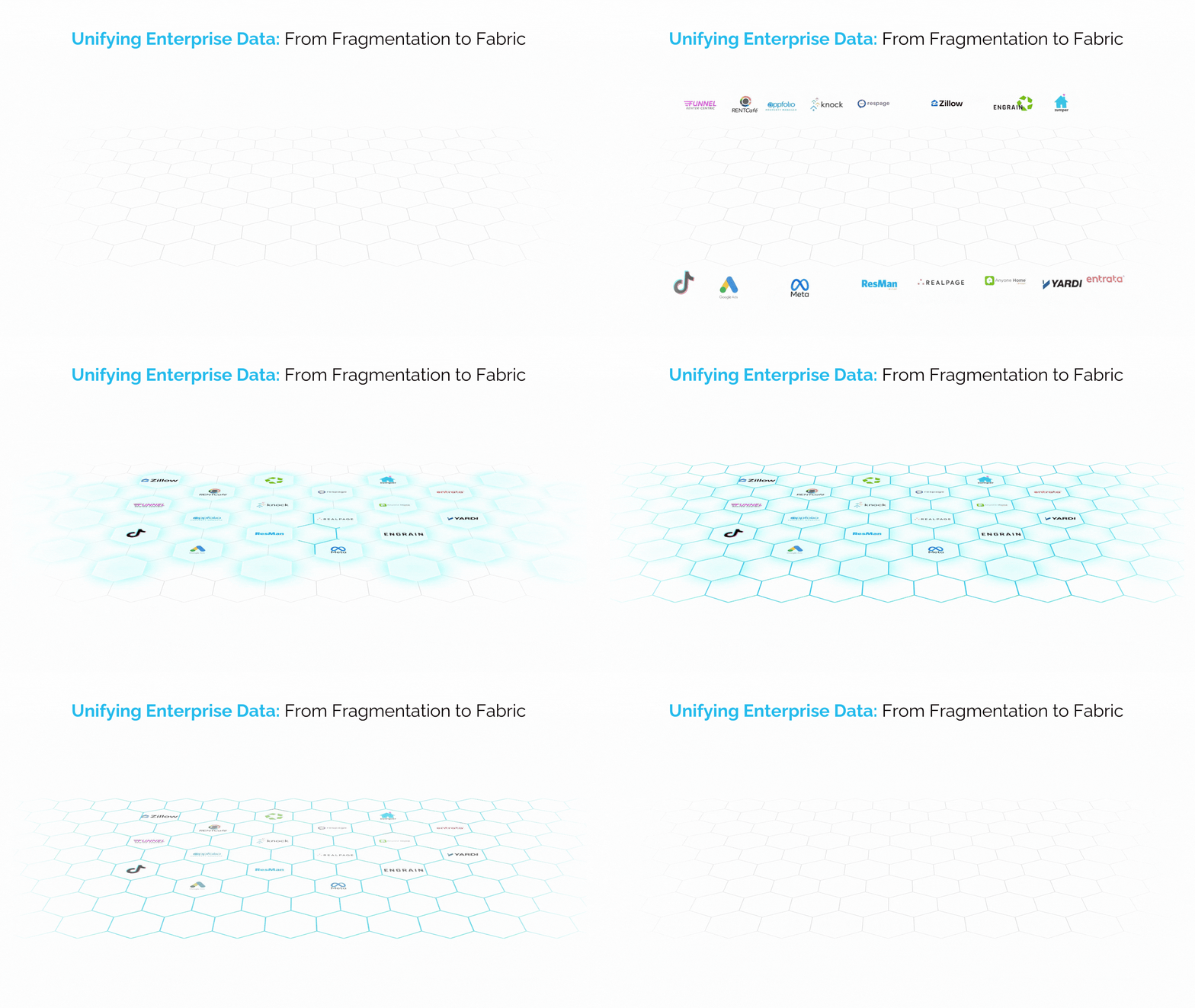
And the operators running on it are dealing with a different set of problems than the ones they had before.
The market will turn. The fragmentation won’t fix itself.
IF your team spends the first part of every leadership meeting reconciling numbers from different systems, THEN the intelligence is fragmenting at the handoff — not in the tools.
IF your AI pilots looked promising and then quietly stalled, THEN the foundation they were built on probably wasn’t ready.
IF the fatigue in your organization outlasts the market cycle, THEN it’s probably not the market.
We went deep on this on The Intelligence Fabric podcast. Episode 6 is where we got into what the stitching actually costs and what it looks like when it stops being manual.
If you want to see what this looks like in practice, we’re happy to show you. [Book a demo 👉 https://hubs.la/Q03MLnL70.]
One question before you go: what’s the thing in your operation that still requires manual stitching every week? Hit reply — we read every one.