
Last week, Mike Brewer reopened the attribution debate, and if you didn’t catch the episode, don’t worry: this note is the part you’ll actually use in your next budget conversation.
We talked about the cracks most teams feel but rarely name:
You’re in meetings that should’ve been decisions.
You’re staring at dashboards that should’ve created clarity.
And somehow you’re still arguing about what the numbers mean.
Attribution is one of the most common places where the problem shows up. Not because attribution is a bad idea, but because the way most systems implement it in multifamily creates a story that feels clean and then quietly undermines your budget decisions.
So before we go any further, here are two “IF / THEN” checks you can run on your own reports:
IF your “Property Website” gets credit for everything, THEN your sources are broken.
IF your lead source changes every time a prospect clicks again, THEN you’ll never know which ad or ILS actually worked.
If you’ve ever seen either of those, you already know the feeling.
You don’t trust the report.
But you also don’t have a better one.
So you do what everyone does: you debate it in a meeting and make your best guess.
And that’s exactly how the “space between information and action” shows up in marketing.
The comment that said the quiet part out loud
One of the reasons last week’s episode hit was because Mike Brewer wasn’t the only one saying it.
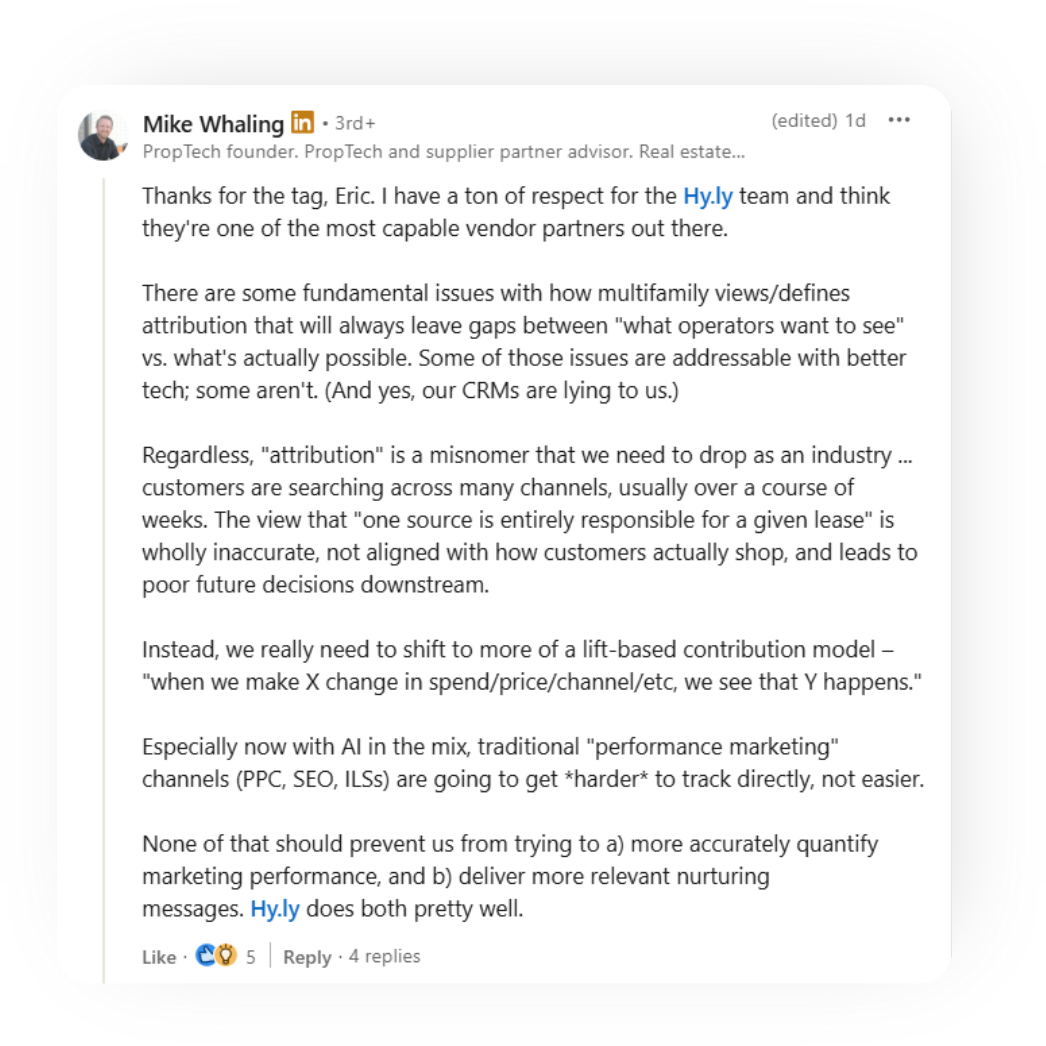
Mike Whaling commented on the thread and basically put the whole industry on the spot:
Attribution is a misnomer.
The idea that one source is responsible for a lease isn’t how people actually shop.
And it leads to bad decisions downstream.
Then he gave the upgrade in one line:
When we change X, does Y move?
That’s the whole shift.
Not credit. Contribution.
Because “who gets the trophy?” is not the same question as “what actually worked?”
Why do your reports keep blaming the website?
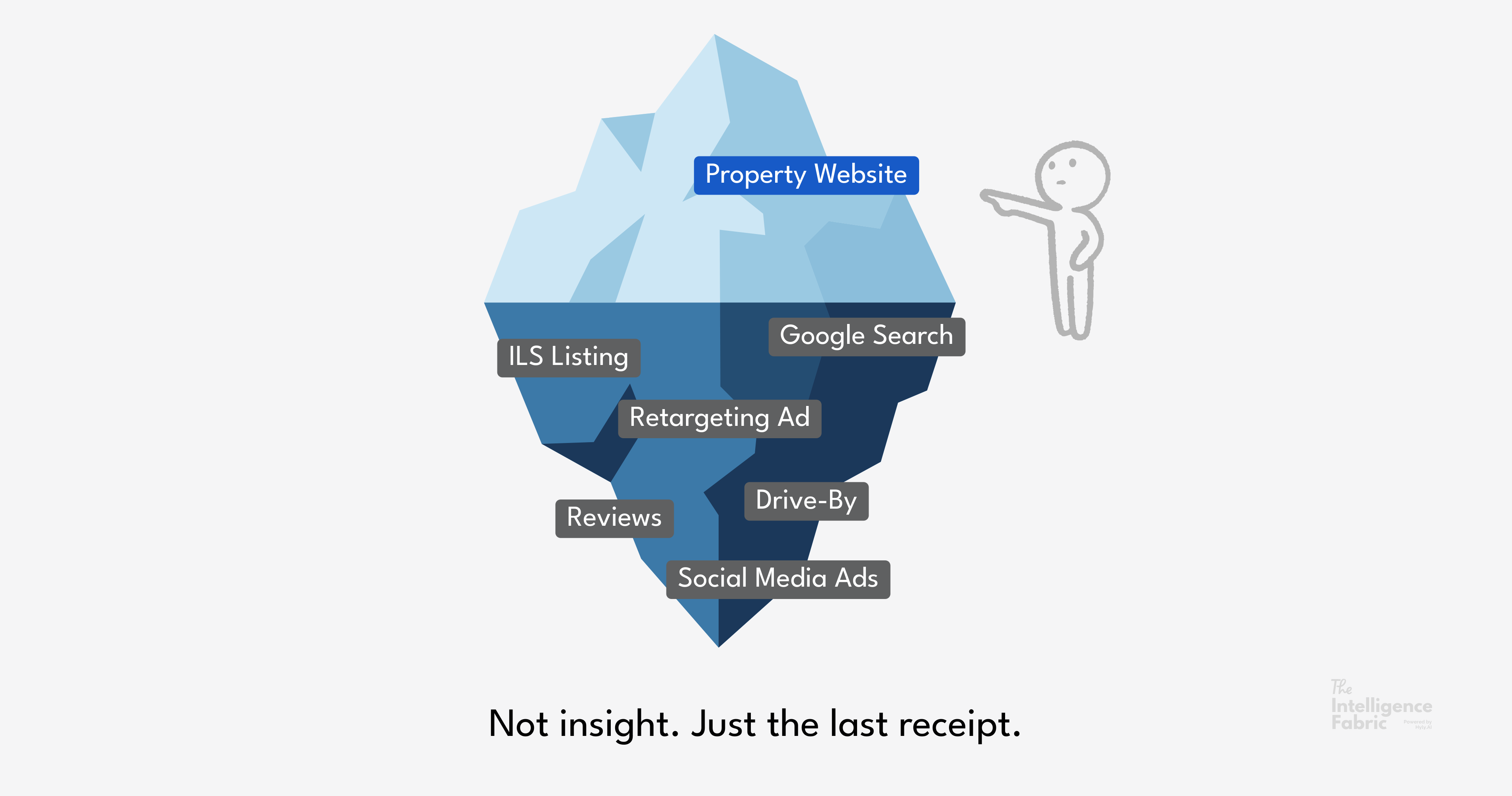
Let’s talk about why “Property Website” becomes the MVP of every report.
Most systems treat the lead source like it’s a single receipt.
But in real life, a lease isn’t one receipt.
It’s a stack of receipts.
A prospect might start on an ILS…
Google you later…
see a retargeting ad…
read reviews…
drive by…
check your Instagram…
then come back to your site…
and then finally fill out a guest card.
A lot of CRMs don’t know what to do with that.
So they do the simplest thing: they label the source based on the last meaningful click.
Which is why the report says:
“Property Website did it.”
That’s not insight. That’s a default label.
It’s like giving one person full credit for a group project because they hit “submit.”
Sure… they submitted it.
But that doesn’t mean they did all the work.
The part that actually costs you money
Here’s where it gets real.
When attribution gets flattened into one label, your budget decisions start drifting.
You cut the wrong channel.
You over-invest in the wrong source.
You blame the wrong team.
You optimize the wrong milestone.
And you can feel it happening in real time because the conversations get weird:
“Leads are up, but tours are down… so should we cut the ILS?”
“Google looks expensive, but it might be doing something… we just can’t prove it.”
“The website is the top source… but that doesn’t feel true.”
Exactly.
Because the report isn’t telling you what worked.
It’s telling you where the journey ended.
And if you make decisions based on where journeys end, you’ll keep misallocating money at the start and middle.
That’s not marketing theory. That’s NOI.
The upgrade: stop asking “who gets credit?”
Here’s the simplest way we can put it:
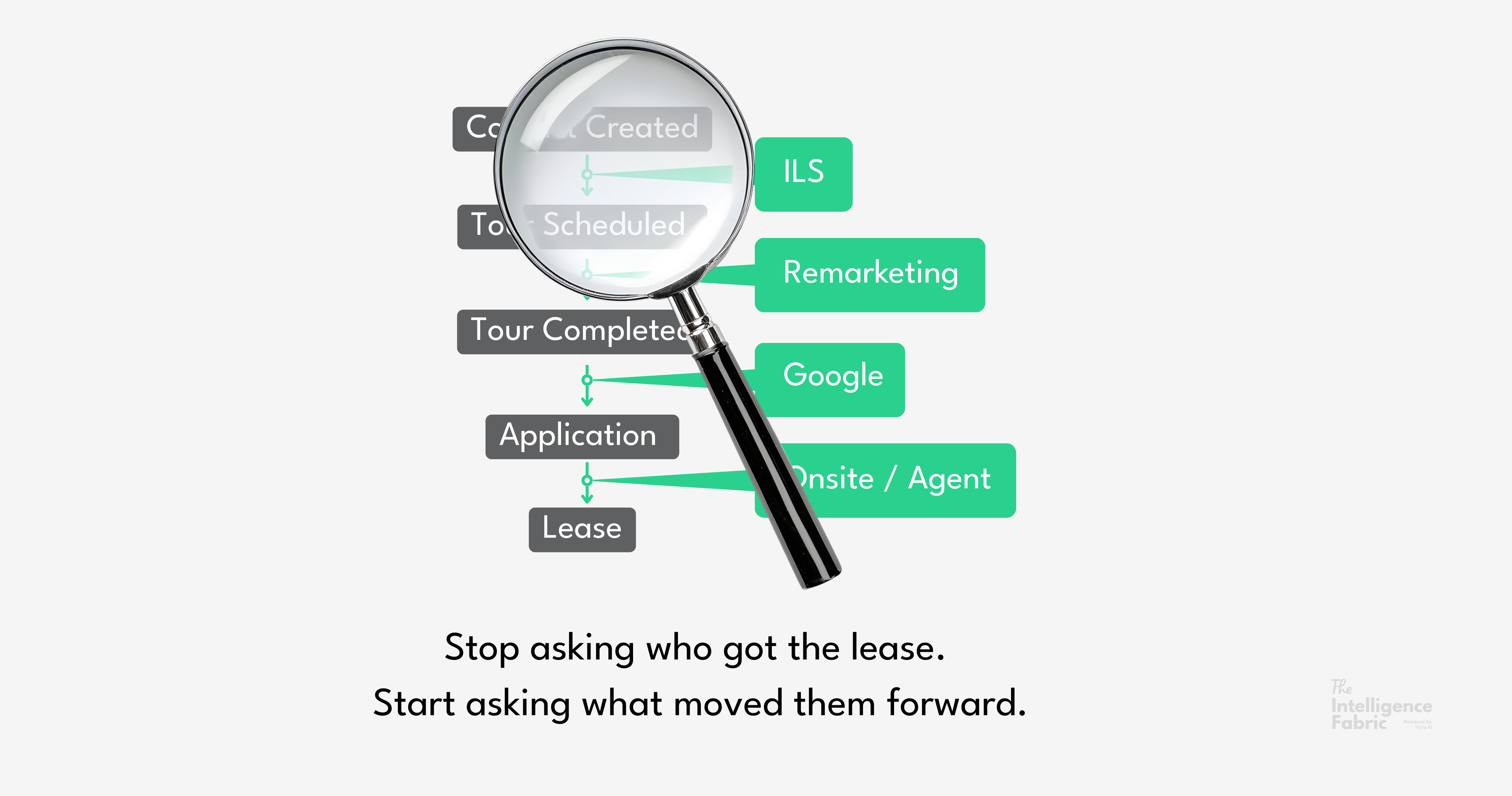
Instead of asking: “Which source got the lease?”
Ask: “What moved the prospect forward?”
Because multifamily isn’t one moment. It’s milestones.
Contact created.
Tour scheduled.
Tour completed.
Application started.
Lease signed.
Different channels matter at different points.
An ILS might be great at starting the journey.
Google might matter most when a prospect is re-checking options near the application.
Remarketing might be the nudge that gets tours scheduled.
Same prospect.
Different moment. Different influence.
That’s what contribution means in normal language.
One question to steal for your next meeting
Next time someone says, “This channel isn’t working,” try asking:
“Which milestone isn’t it moving?”
That one question changes the energy in the room.
It turns the conversation from blame → to leverage.
From stories → to decisions.
From “who gets credit?” → to “what’s actually moving the journey?”
And that’s the direction this whole series is heading.
Not more dashboards or louder opinions.
Just cleaner cause-and-effect decisions stop resetting every week.
If you want the full context, yesterday’s episode is here:
Watch on YouTube:
Before we go, hold onto this:
If your reporting can only tell you where the journey ended, you’ll keep making decisions as if the journey started there, too.
And that’s why attribution arguments never really end.
Because deep down, we’re not fighting about credit.
We’re fighting about something bigger:
We built a stack that moves data, but we never built the layer that carries meaning.
So next week, we’re pulling on that thread:
Why Multifamily built the stack and forgot the Fabric.
Once you see that, you’ll understand why so many “modern” tech stacks still feel manual.