

A fabric isn’t one thread. It’s thousands of separate threads pulled tight enough together that they move as one piece of cloth. Pull on one corner, and the whole thing responds. That’s the actual bet behind The Intelligence Fabric.
Multifamily systems don’t need to be replaced or crammed into one box. They need to be woven together tightly enough to act like one.
When ATMs showed up on every corner, bank tellers moved out from behind the cash drawer and into real conversations with customers, the part of the job a machine still can’t do. Nobody planned that shift on a whiteboard somewhere. It just happened, because the rote work got absorbed and what was left needed a person.
This week, Jacob Carter sat down with Mike Brewer for the first episode of The Intelligence Fabric, Season 3, to talk about exactly this: what happens to the data mess, and what happens to the people, once AI actually shows up on-site.
Jacob Carter doesn’t think your data problem is a data problem. He thinks the years multifamily has spent trying to normalize CRM, PMS, and ILS data into one unified source of truth were aimed at the wrong target. Forcing legacy and new systems to agree on one format is, in his words, wildly labor-intensive. His answer isn’t a cleaner dataset. It’s a layer that reconciles what’s already there in real time, without waiting for every system to speak the same language first.
What The Mess Actually Looks Like in Multifamily
A leasing agent, five minutes before a call with a prospect, is dealing with more than the call itself.
Unit availability lives in the PMS.
Pricing history lives somewhere else.
The prospect’s last three interactions, the email they opened, the call they missed, sit in a CRM that doesn’t talk to either one.
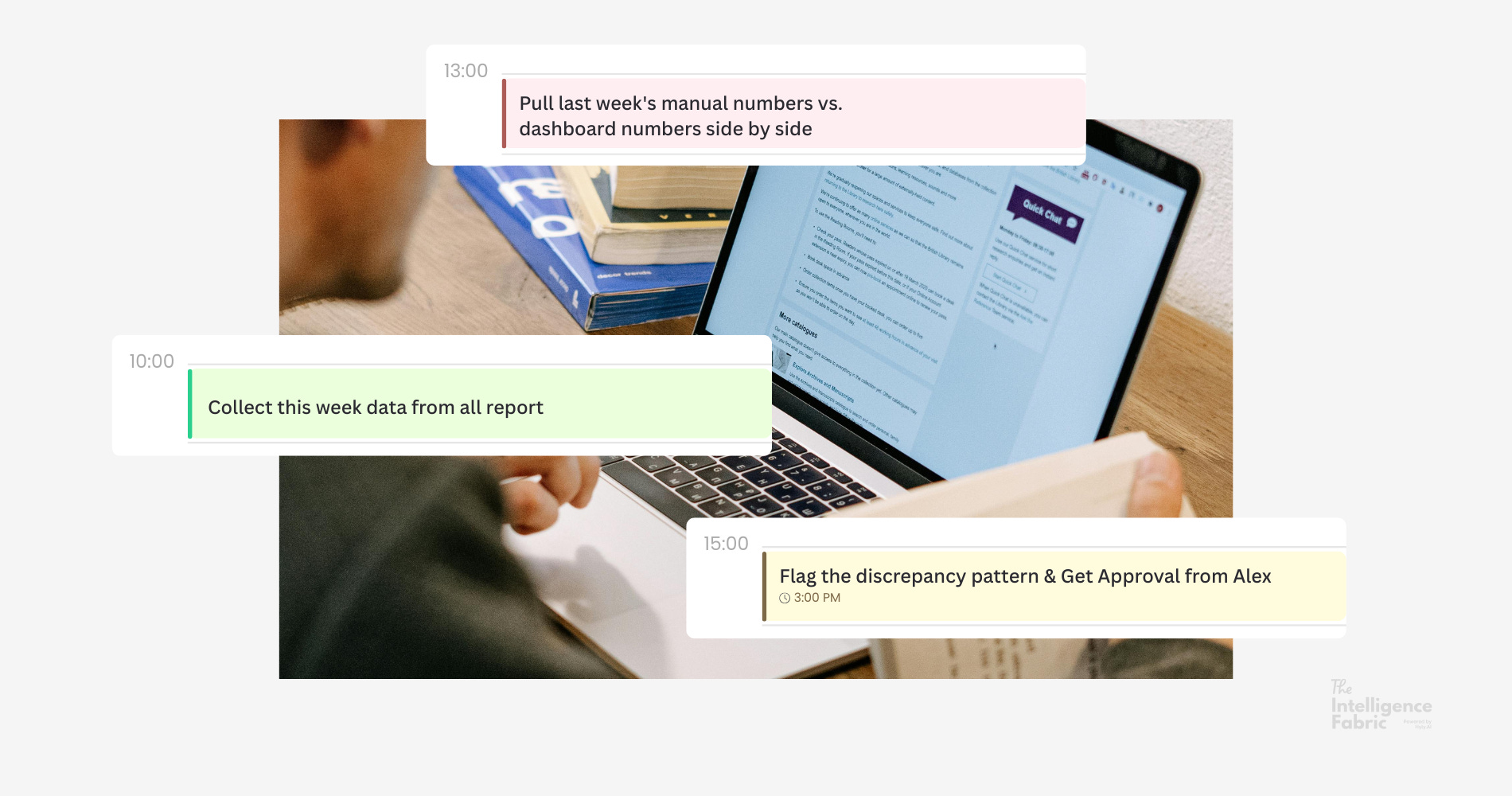
Each system is right by its own record. They just don’t agree with each other, and nobody built anything to make them.
So the agent does what people have always done when the systems don’t help: open four tabs, cross-check by hand, and trust memory over any dashboard. A team quietly decided the software isn’t reliable enough to lean on, and built a manual workaround instead.
The real cost of a data mess in multifamily is the hours a team spends every week rebuilding trust in numbers that should have been trustworthy from the start.
What’s Actually Happening Now That AI Is On-Site
AI has been in the leasing office for close to a decade now, since the first chatbots showed up around 2015. So most leasing offices aren’t waiting for AI anymore.
A chatbot answers the first inquiry.
A voice assistant picks up calls after hours.
AI drafts the follow-up email before the agent opens their inbox.
The tools are already there. The problem is what they’re pulling from.
Those tools still run on the same disconnected systems the team never fully trusted in the first place. The chatbot quotes a price the PMS hasn’t updated yet. The voice assistant has no previous context of the prospect conversation and offers a unit that was already leased by someone an hour ago.
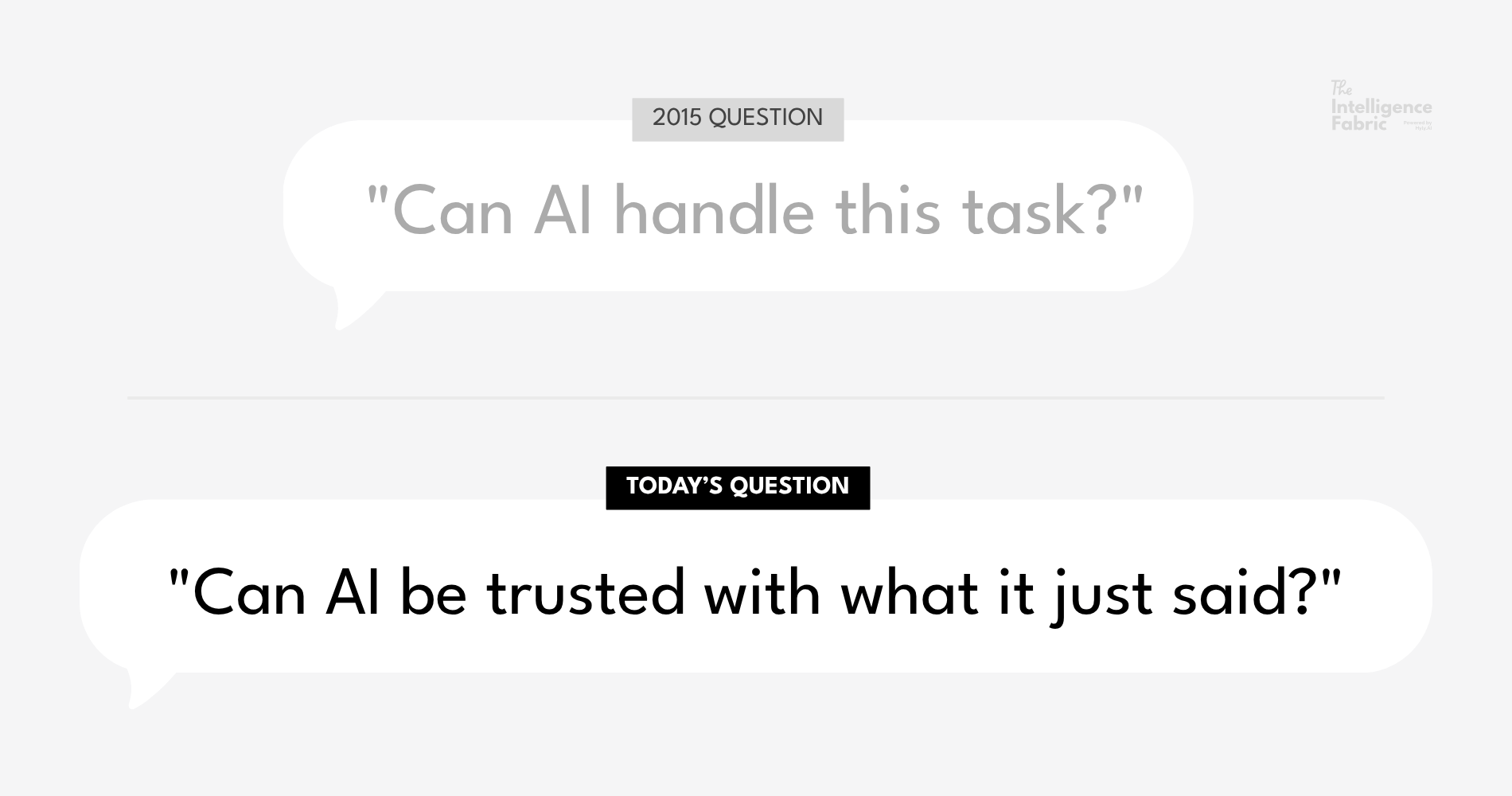
The AI is doing exactly what it’s built to do, answering fast and with confidence. The issue is the answer underneath was already wrong before it got there.
So agents keep doing what they’ve always done: they quietly re-verify what the tool just told a prospect, because trusting it fully still feels risky. The tool added a step in front of the manual work instead of removing it.
What Actually Has To Happen
What most multifamily teams haven’t done yet is smaller and less exciting than adding another AI feature: the systems underneath have to agree with each other before anything built on top of them can be trusted.
Once that’s true, the hours spent quietly re-checking a chatbot’s answer disappear. That freed-up time only helps if it gets pointed somewhere on purpose: toward the resident walk-in, the tour that needs a human read on the room, the judgment call no dashboard or chatbot can make.
AI already removed some of the busywork. The trust problem underneath it is still costing teams time every day.
Leasing offices are disconnected because nobody wove the tools together before turning them loose. That’s where this stops being about a mess and starts being about a fabric.
This Is What The Intelligence Fabric Actually Does
This is the shape of the argument Jacob was making from a builder’s seat: stop trying to normalize everything into one clean source, and build something that reconciles it in real time instead. Here’s what that actually looks like on the ground.
Go back to the specific moments that broke down in the mess above:
The PMS with one price.
The chatbot quoting another.
The voice assistant offering a unit that was already leased an hour earlier.
Every one of those failures happens at the same seam, the point where two systems were supposed to agree and didn’t.
The Intelligence Fabric is the foundation layer that sits underneath the stack, PMS, CRM, ILS, ad platforms, and connects what’s already there into one reconciled, decision-ready view. When a lease gets signed in the PMS, that record becomes part of the same reconciled view the CRM, the chatbot, and the voice assistant all read from.
Pull on one thread of a fabric and the whole piece moves. Update one system connected through the Fabric, and every tool reading from it moves with it instead of catching up a day later.
That’s the difference between adding another AI tool and fixing what was broken underneath. A chatbot connected to the Fabric answers from the same live picture that every other tool and every person in the office is also looking at. The agent stops re-checking because the tool is finally pulling from something worth trusting.
Watch the full conversation between Jacob Carter and Mike Brewer above if you haven’t yet. This is only the first one. Every conversation this season goes a level deeper than the last.