
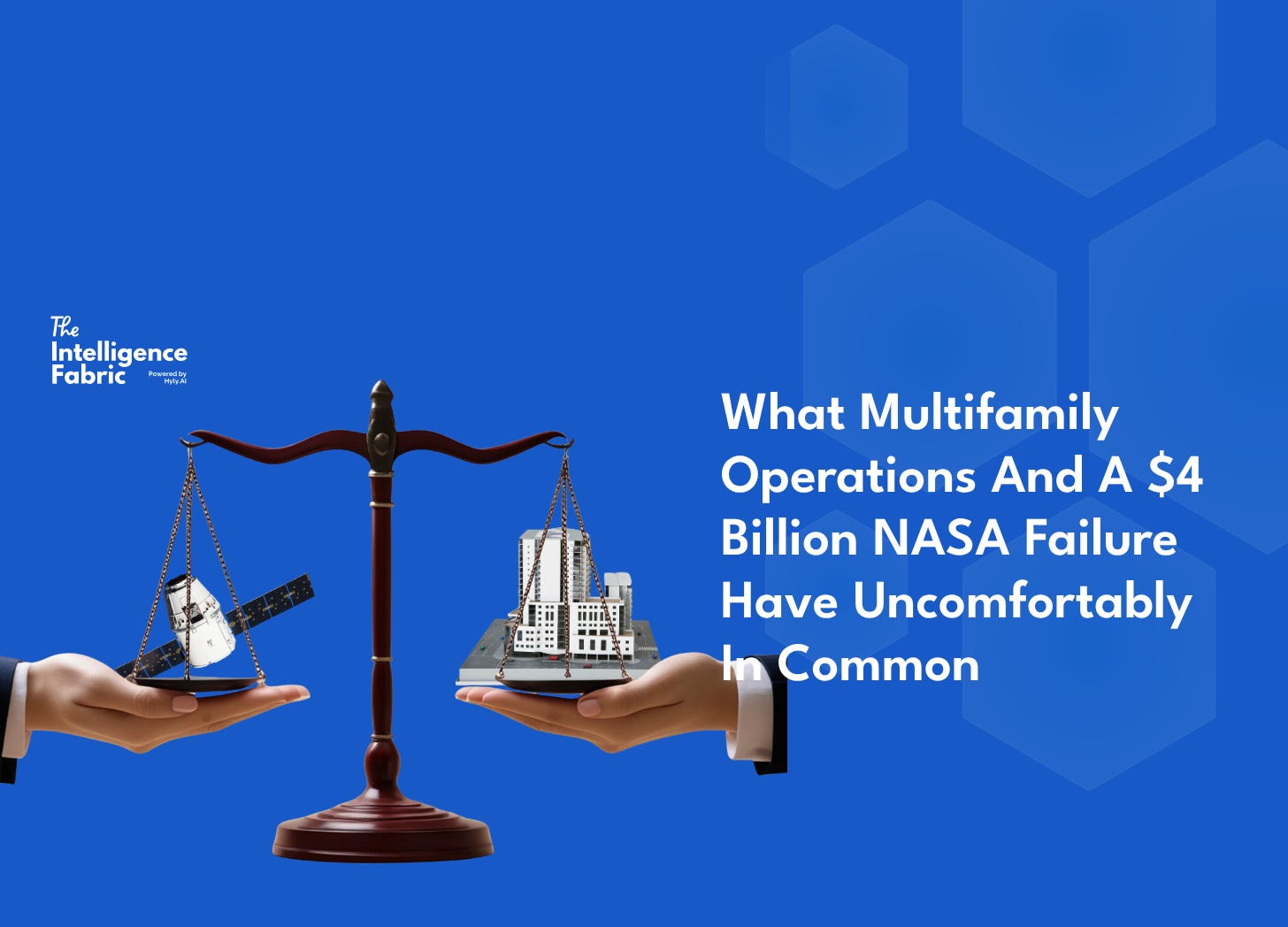
In 1972, NASA launched the last Saturn V rocket.
It was the most powerful machine ever built, put twelve people on the moon, and then the program ended.
Fifty years later, NASA needed a heavy-lift rocket again. Every blueprint was sitting right there in the archive, every spec and measurement and technical drawing perfectly preserved, and they still had to spend billions of dollars and fifteen years building a new rocket from scratch.
Why? Because the one thing the blueprints never captured was how to actually build the thing.
All the judgment those engineers developed over decades, the workarounds, the hallway decisions, the things you just knew after doing it long enough, none of that made it onto a drawing. It lived in people. And when the people retired, it retired with them.
Now sit with that for a second.
Your PMS logs every transaction.
Your CRM tracks every lead.
Your reports generate on time every single month.
You have more documentation than any multifamily operator in history.
And none of it knows what your best regional manager knows.
Which properties are about to slip before the numbers say so. Which ILS channel drives real leases at which asset versus which one just fills the dashboard with noise. When a hesitant prospect needs a call and when they need space.
That knowledge is not in your system. It is living in a person, and it will walk out the door with them, on a completely ordinary Tuesday, and your operation will spend the next two quarters figuring out what just happened.
Mike Brewer named it in this week’s episode. Most operators already feel it. Almost nobody says it out loud in a room full of peers.
875 Minutes a Month and None of It Making Decisions
KETTLER manages 106 properties across the Mid-Atlantic, and for a long time, each marketing manager spent up to 35 minutes per property every single month just pulling data from different platforms and reconciling what each one called the same thing.
Do the math on 25 properties per manager, and that’s 875 minutes a month, nearly 15 hours, and none of it was actually making decisions. All of it was just building the conditions under which a decision might eventually become possible.
One platform called a prospect a lead. Another called it a contact. A third quietly discarded everyone who didn’t respond, even though an unresponsive prospect is actually data.
High volume with low response doesn’t mean your campaign failed. It might mean your targeting pulled the wrong demographic for that specific asset entirely, and without that signal, you’ll never run that diagnosis.
The manager who had been doing this reconciliation for three years knew which numbers to trust and which ones to question. That instinct was in her head, not in any document anywhere. When she got stretched across more properties, or got promoted, or left, the reconciliation still happened every month. It just happened with less context, by someone still building the instinct from scratch, making their best guesses along the way.
That’s what a workaround looks like after it’s been running long enough that nobody remembers to call it one.
IF your marketing managers are spending 15 hours a month moving data between platforms, THEN the intelligence is in the people doing the moving.
$9,400 Hiding in Reports that Looked Completely Fine
Here’s where it gets expensive in a way that’s almost impressive.
Across multifamily portfolios running Google Ads, 13% of paid clicks go to existing residents, people who already live there, clicking to pay rent or check a maintenance request. On a $72,000 annual ad budget, that’s $9,400 a year cycling back to people who already signed a lease. And the reports looked completely normal the entire time with healthy click volumes and normal cost-per-click.
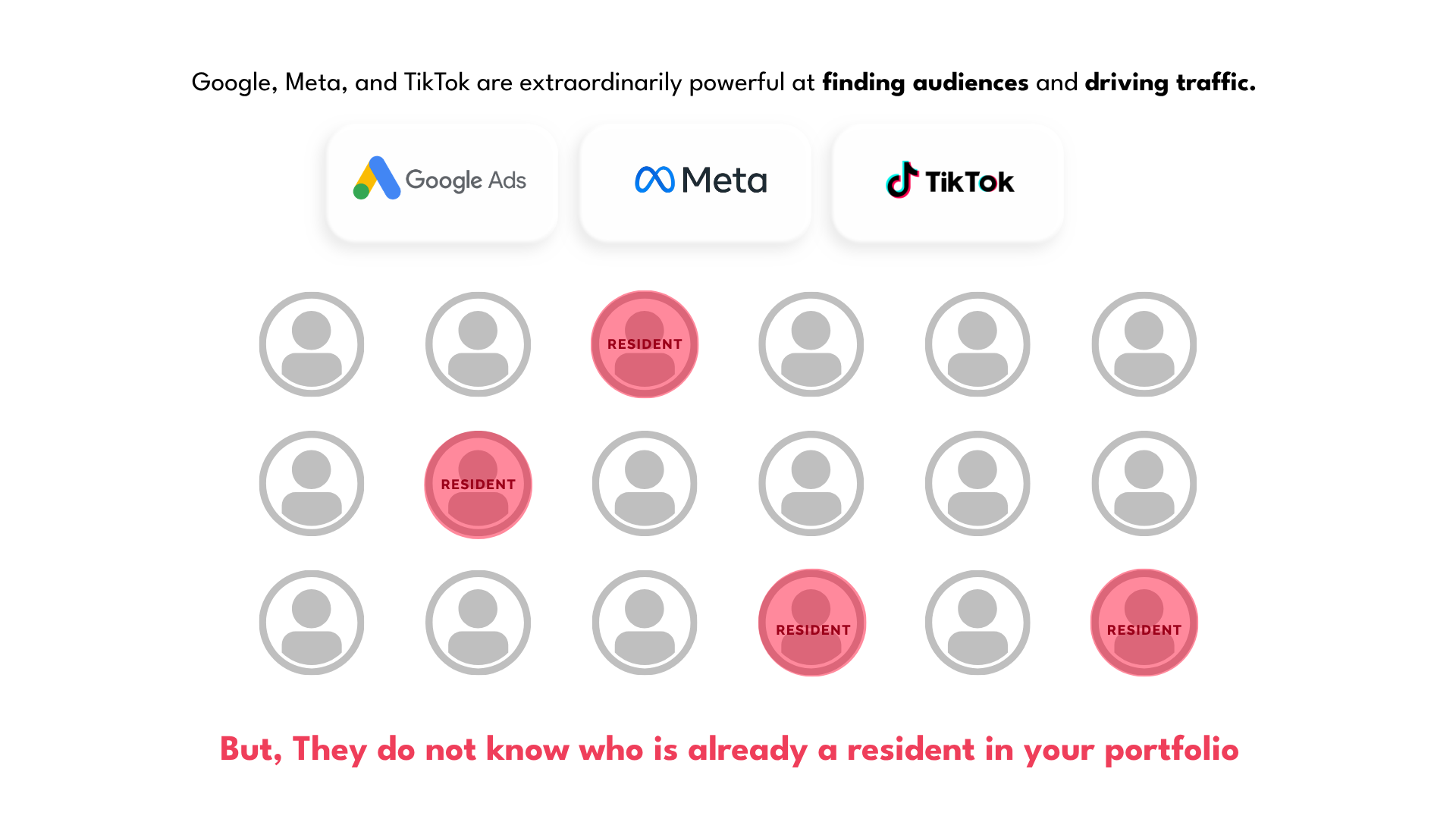
The waste was invisible because nobody connected prospect identity to ad targeting. An experienced performance marketing director might have eventually asked the right question and caught it. But that judgment lives in a person, and when that person moves on, the campaign just keeps running, and the reports keep looking fine, and the $9,400 keeps going nowhere useful.
IF your paid media numbers look healthy and occupancy still isn’t moving the way the spend should justify, THEN budget is going somewhere your system cannot see.
The only thing standing between you and that number right now is whether someone on your current team has been around long enough to know to look for it.
Which brings us to the part where someone in the back says: just hire better people.
“Just hire better people.” Sure. Let’s Talk About that
There’s a moment in this week’s episode where Mike gets ahead of the obvious pushback.
“Isn’t this just the turnover problem? Hire better, retain better, problem solved?”
His answer is worth sitting with.
Retention matters; it always will, but the organizations he actually respects aren’t the ones who figured out how to hold onto people forever. They’re the ones who built systems that don’t fall apart when people leave, and those are genuinely two different ways of thinking about the problem.
The NASA engineers didn’t quit. They had long, successful careers and retired on good terms. The knowledge didn’t disappear because of bad retention. It disappeared because nobody ever figured out how to put it somewhere it could stay, and when the people left, it left with them.
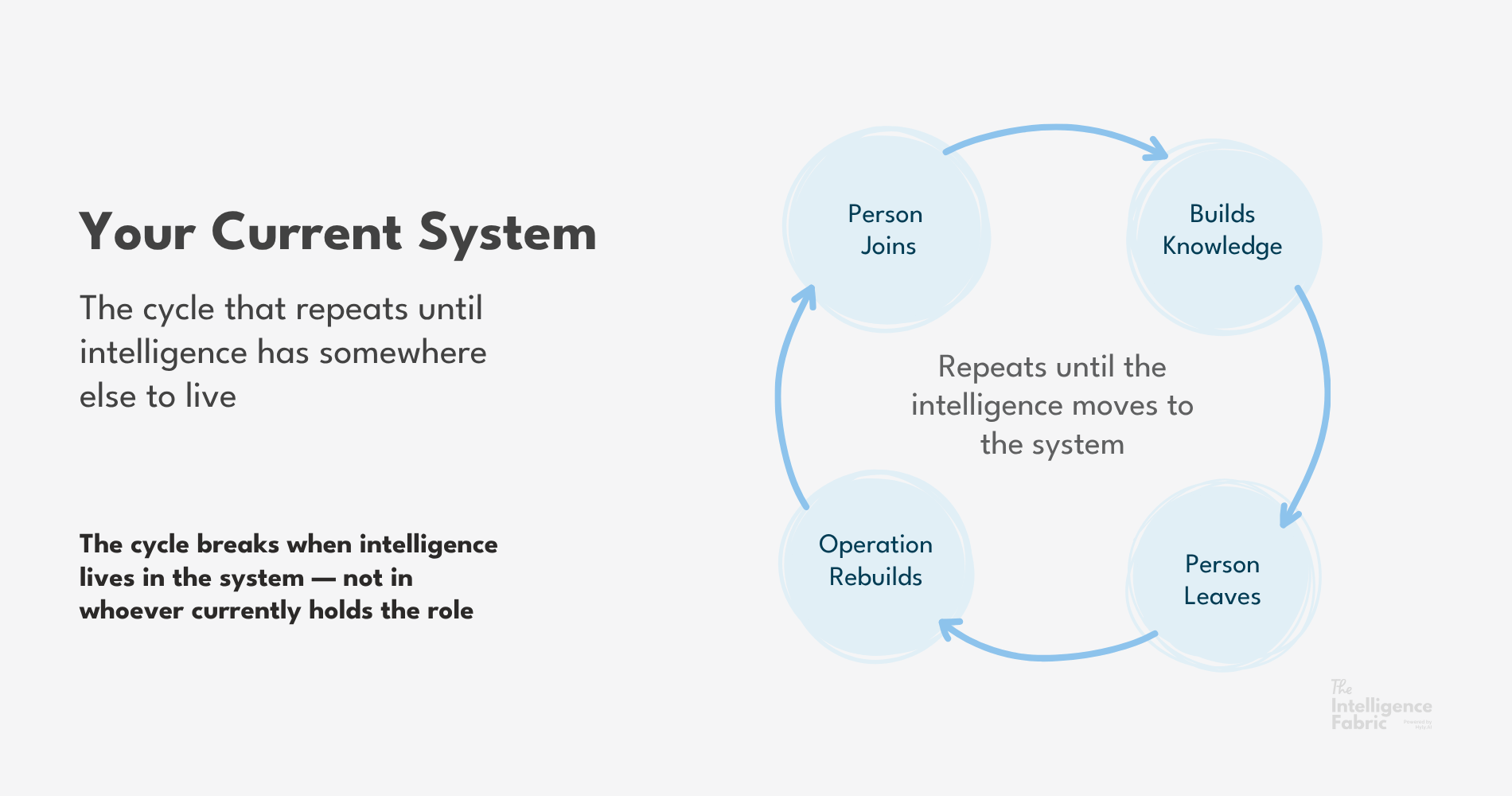
Your operation won’t collapse when your best regional gives notice. It’ll just slow down in ways that take two quarters to diagnose and six more months to actually fix. The next person will spend most of their first year quietly rebuilding what the last person carried in their head, and that cycle will keep repeating until the intelligence has somewhere to live besides whoever is currently in the role.
IF one senior operator leaving sets your portfolio back two quarters, THEN the intelligence was never really in the organization.
It was in a person, and you were one resignation away from starting over without knowing it.
The Intelligence Fabric is built on one idea. The judgment that drives results in a multifamily operation, the timing, the pattern recognition, the calls that get made before the data confirms them, belongs in the organizational architecture, not in whoever currently holds the role. When that intelligence lives in the system, it runs after the person who built it has moved on. It carries itself forward.
The Performance Dip is Already on its Way
Multifamily will not lose knowledge because people are disloyal or the market is brutal or turnover is unusually high this cycle. The actual reason is that industry never built a place for it to go.
Your best regional knows which property is six weeks from a bad quarter.
Your top leasing consultant knows which lead source is quietly pulling the wrong traffic at that one asset.
Your director of marketing knows which vendor actually performs and which one just performs in presentations.
None of that is in your PMS, in your CRM or in the dashboard ownership reviews every quarter.
It is in people. It has always been in people. And every time one of them leaves, your operation spends the next two quarters pretending the gap is a market condition.
This is the part of the conversation multifamily has been avoiding. The tools got built. The dashboards got green. The reports got faster. And the intelligence that actually runs the operation is still riding around in someone’s laptop bag, one resignation away from walking out the door.
So before your next weekly standup, before the next ownership review, before the next hire who will spend their first year solving problems the last person already solved, answer one question honestly.
What does your operation forget every time someone leaves?
Reply. Every single one gets read.