
Six months ago, somebody in your org made a call that looked smart.
Rent bump. AI chatbot. Occupancy push. Headcount cut.
The numbers moved in the right direction. Leadership nodded along, and the owner review meeting ended early for once with happy faces.
That call is calling you back right now, and most operators have no idea those two things are even related.
What Physics Got Right That Multifamily Keeps Getting Wrong
Newton said every action has an equal and opposite reaction.
He was talking about billiard balls. But he could have been talking about a 400-unit portfolio in Phoenix.
The difference is a billiard ball reacts immediately. You see the cause and the effect in the same second.
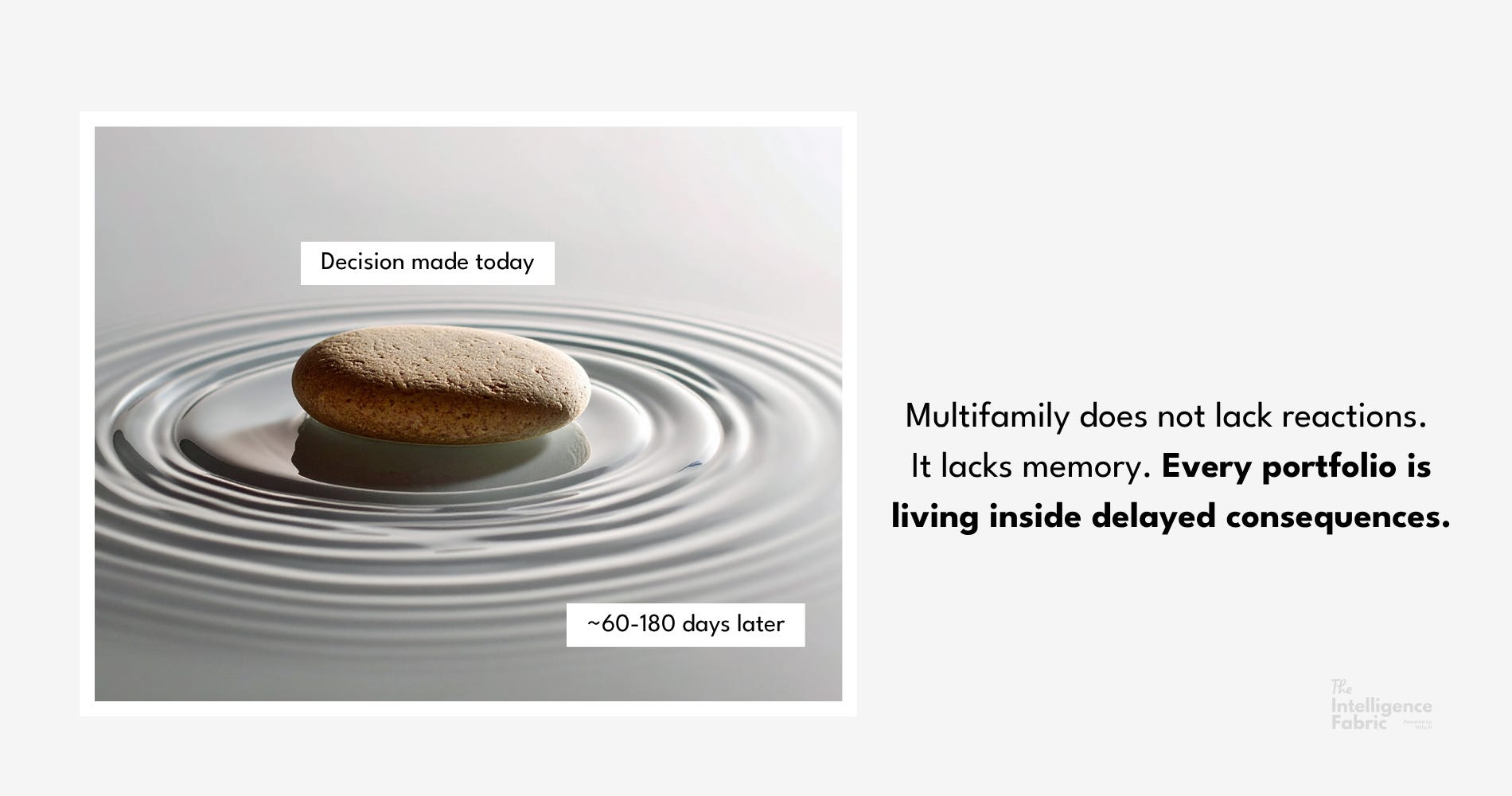
In multifamily, the reaction takes 60, 90, sometimes 180 days to show up. By the time it does, the original decision is buried under five other quarters of data and three leadership changes. Nobody in the room remembers signing off on it.
So the reaction gets blamed on the market. On new supply. On residents being “more transient these days.”
Rarely on the call that started it.
“Great News, Tour Volume Is Up” (The Rest of That Sentence Is in a Different Report.)
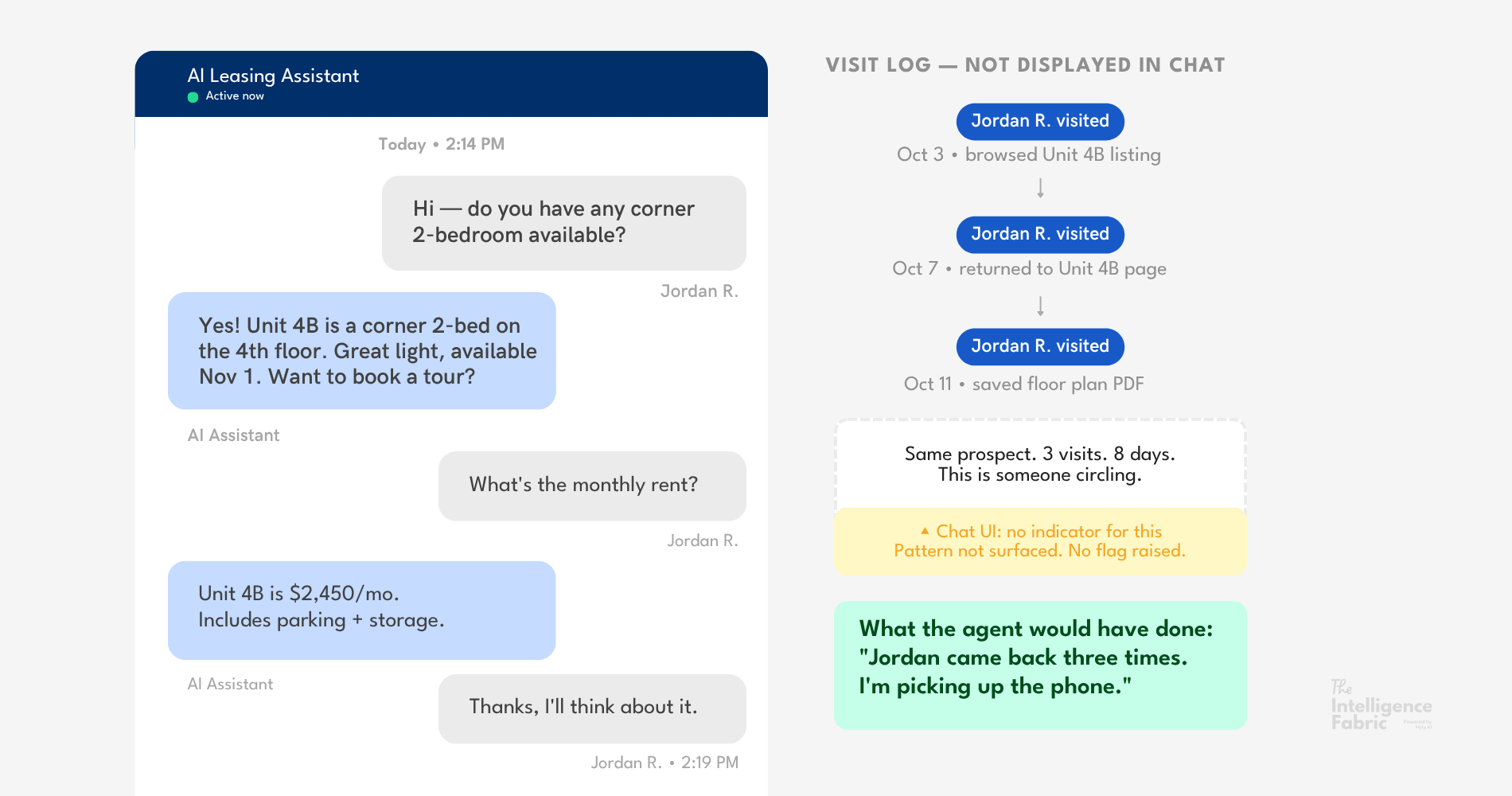
You put an AI chatbot on your leasing funnel. Response time goes from four hours to four minutes. Your leasing team stops drowning in the same parking and pet fee questions on repeat. They get two hours back in their day. Tour volume goes up. The report looks good. Somebody puts together a slide about it.
That is the action.
Now here is the part of that story nobody tracked.
Your leasing agent used to answer those repetitive questions. She also used to notice when the same prospect came back and asked about the corner 2-bedroom three times in five days. She would pick up the phone. Half the time, that prospect signed.
The chatbot answered every question correctly and missed the patterns.
Ninety days later, tour-to-application is up. Application-to-lease is softer than it was before the chatbot. The debrief focuses on lead quality, market conditions, pricing. The chatbot does not come up. It is working perfectly. Perfectly.
IF your close rate softened in the 90 days after your AI went live, THEN the tool did its job. The job that it could not do was the one your leasing agent was doing without anyone knowing it had a name.
The Rent Increase That Paid for Itself Twice (Once on the Way Up, Once on the Way Out)
You push rents 6% at renewal. Your revenue management software flagged it as within range. Leadership approved it. NOI moves in your favor that quarter. Asset management sends a good email, and you move on.
Some residents move on, too. The ones with a 720 credit score, a stable job, and a few Zillow tabs open. They silently start looking, and sixty days before lease expiration, they submit notice.
Now you are looking at $4,000 in hard turnover costs per unit, 46 days of vacancy while the unit sits, and a concession offer to the next resident that wipes out most of what the rent bump gained.
On a 300-unit property where the renewal rate drops 5 points, that math is 15 extra move-outs. Roughly $60,000 in hard costs before you count the lost rent.
From one pricing call. One good quarter.
The rent increase worked. The reaction costs more than the increase recovered. And because the renewal report comes out three months after the pricing decision, the two never end up in the same conversation.
Mike Brewer digs into exactly this in Episode 5. Worth your time before your next pricing meeting.
Why the Reaction Always Shows Up in the Wrong Room
The rent decision sits in revenue management.
The renewal outcome sits in the PMS.
The leasing conversion data sits in the CRM.
The prospect behavior that determines whether your AI chatbot closes or loses the lead sits in website analytics.
None of those systems talk to each other.
Each one reports accurately on its own slice. None of them shows what happens between the slices.
So the reaction shows up on a Wednesday in a report owned by someone who was not in the room when the original call got made. They log it. They flag it. They schedule a follow-up. By then, the decision that caused it is six months old and buried.
Season 1 of The Intelligence Fabric has been around the same story in different clothes every time.
119,386 leads sitting in a CRM marked lost, while the same prospects were back on the property website three times a week.
66% of ad spend going to campaigns that booked zero tours because the attribution stopped at the last click and never went back to where the prospect started.
A regional walking out the door with six years of leasing intelligence in her head and nothing in the system.
Every single one of those is the same thing. An action in one system produces a consequence in another, with nothing in between to connect them.
IF your team spends more time in post-mortems than in early warnings, THEN your stack is built to explain what went wrong, not to see it coming. Those are two very different products.
Take 60 Seconds Before You Leave This Tab
Now ask:
Where does the reaction show up in your stack, and who is actually watching that screen?
If nobody is, the reaction is still coming. It always does.
Reply and tell us what call you are looking at differently right now. Every reply gets read here.
The Intelligence Fabric. For multifamily operators who have made the call that looked right, celebrated the quarter, and then spent the next two quarters figuring out what went wrong. If someone on your team needs to read this, send it their way.